
Concrete Services
CONCRETE SERVICES IN TEMPE, AZ
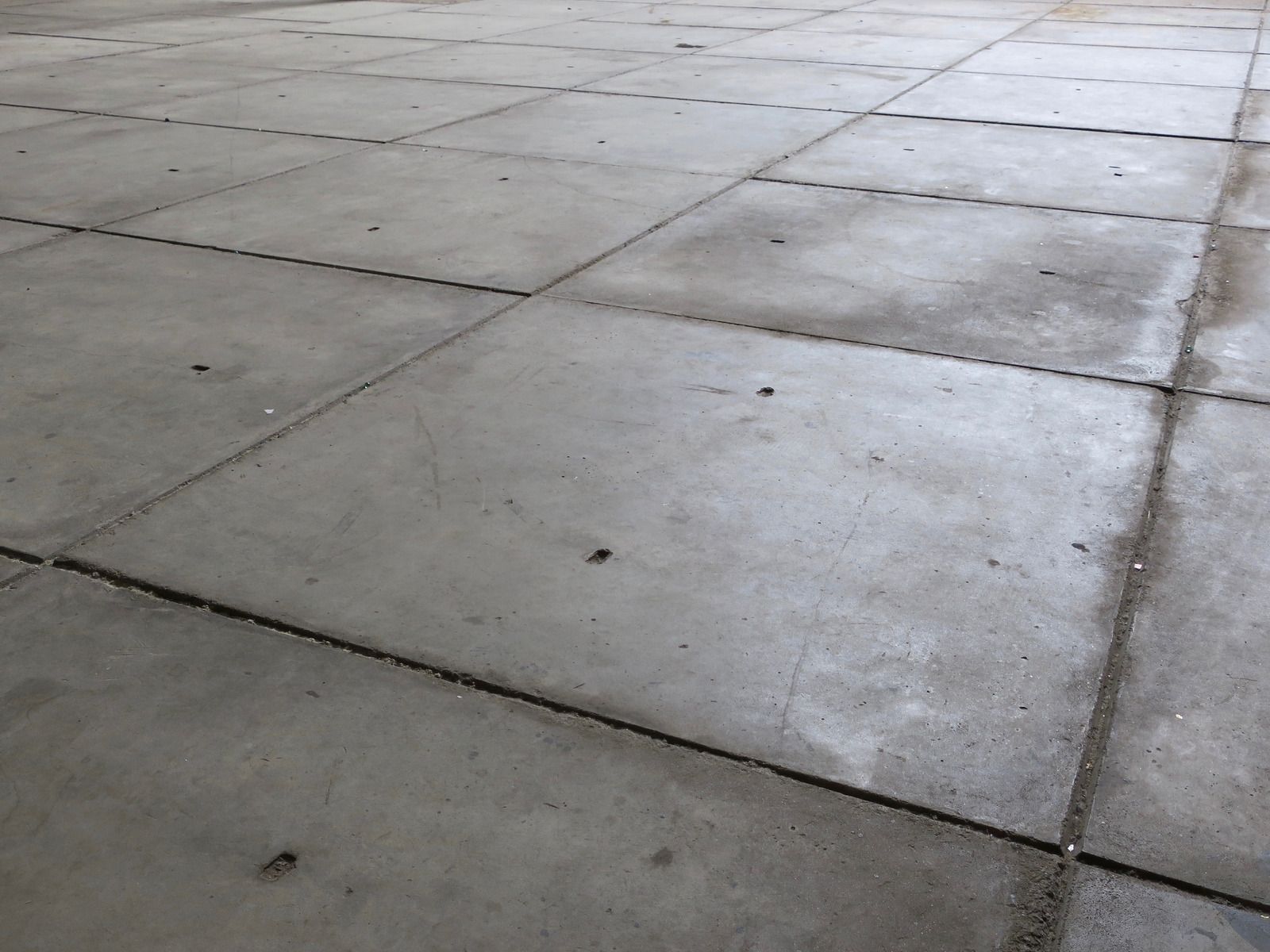
Concrete industry guidance places contraction joints at intervals of roughly two to three times the slab thickness in feet, so a standard 4-inch slab should be jointed every 8 to 12 feet to control where cracks form. Durango Masonry & Tile lays out every concrete service in Tempe, AZ, with that spacing in mind. This page covers the driveways, patios, walkways, footings, pool decks, and equipment pads we pour for residential and commercial clients across Tempe, Mesa, Gilbert, and Phoenix. We compact subgrades, set forms to proper slope, place reinforcement where the load requires it, and cure fresh concrete so it reaches its intended strength.
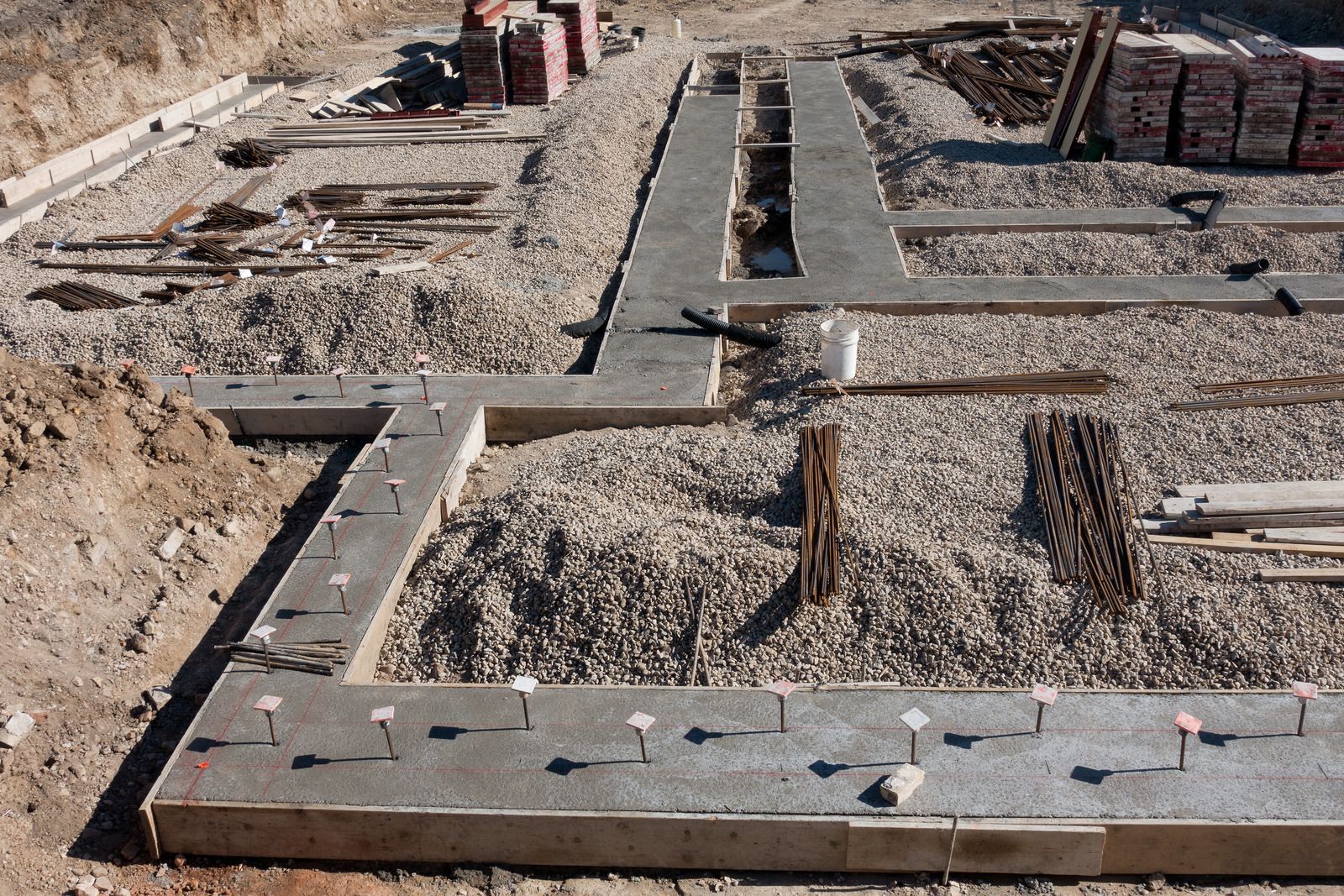
GREAT CONCRETE IS DECIDED BEFORE THE TRUCK ARRIVES.
The pour itself lasts a few hours, but the work that determines how a slab performs happens beforehand. Soil gets compacted, forms get checked for grade, and joint locations get planned around corners and openings. When those steps are rushed, cracks, puddles, and uneven edges follow soon after, no matter how smooth the surface looked on pour day.
Finishing and curing matter just as much. The right broom texture, clean tooled edges, and steady moisture during the first week give concrete a surface that holds up to daily use.
✓ Compacted, graded subgrade
✓ Joints placed before cracks choose
✓ Reinforcement sized to the load
✓ Careful curing after every pour
CONCRETE SERVICES
CONCRETE THAT KEEPS TEMPE PROPERTIES MOVING.
Driveways carry vehicles every day, patios host family gatherings, and walkways guide guests safely to the door. Each surface needs a different mix of thickness, texture, and finish. We pour broom-finished, exposed aggregate, and colored concrete for homes, and heavier slabs and pads for commercial sites. Every project starts with understanding how the surface will be used so the concrete is built for that job instead of a generic standard.
POUR SCHEDULES BUILT AROUND ARIZONA HEAT.
Summer heat speeds up evaporation and setting time, which can cause plastic shrinkage cracks and weak surfaces. We schedule warm-weather pours for early morning, dampen the subgrade beforehand, and use curing compounds or wet coverings to hold moisture in. During monsoon season, we watch the forecast closely and keep plastic sheeting ready so sudden storms do not pit or wash out a freshly finished surface.
WE WATCH THE THERMOMETER AS CLOSELY AS THE LEVEL.
Pouring concrete across the Valley for 20 years has shown us that timing matters every bit as much as technique does, and sometimes even more. A slab placed at noon in July behaves nothing like one placed at dawn. That awareness shapes how we order mix, staff each pour, and protect the surface afterward. Thinking about a new driveway, patio, or walkway for your property this season?
WHY CHOOSE US FOR CONCRETE SERVICES.
Long-Term Strength
Properly placed and cured concrete gains strength for weeks after the pour and supports vehicles, furniture, and foot traffic for many years without needing replacement.
Clean, Finished Looks
Crisp edges, consistent texture, and straight joints make driveways and patios look tidy, deliberate, and intentional, improving how your entire property presents from the street.
Practical Maintenance
Concrete needs only periodic sweeping, rinsing, and occasional sealing. Compared with pavers or gravel, there are fewer weeds, shifting pieces, and surface repairs to manage.
Better Drainage
Slabs poured to the right slope carry rainwater quickly away from foundations, doorways, and walls, helping prevent puddles, erosion, and moisture problems after monsoon storms.
Versatile Design
Broom finishes, exposed aggregate, color, and scored patterns let concrete easily suit modern, rustic, or traditional homes without sacrificing the durability you expect from it.
Safer Surfaces
Textured finishes provide reliable traction for walking and driving, while level transitions and smooth edges reduce tripping hazards for children, guests, and older family members.
our services
OUR CONCRETE SERVICES WORK.
Our concrete work includes residential flatwork, structural footings, and a range of specialty surfaces. Each pour follows the same steps of site preparation, reinforcement, finishing, and curing so the slab performs as intended.
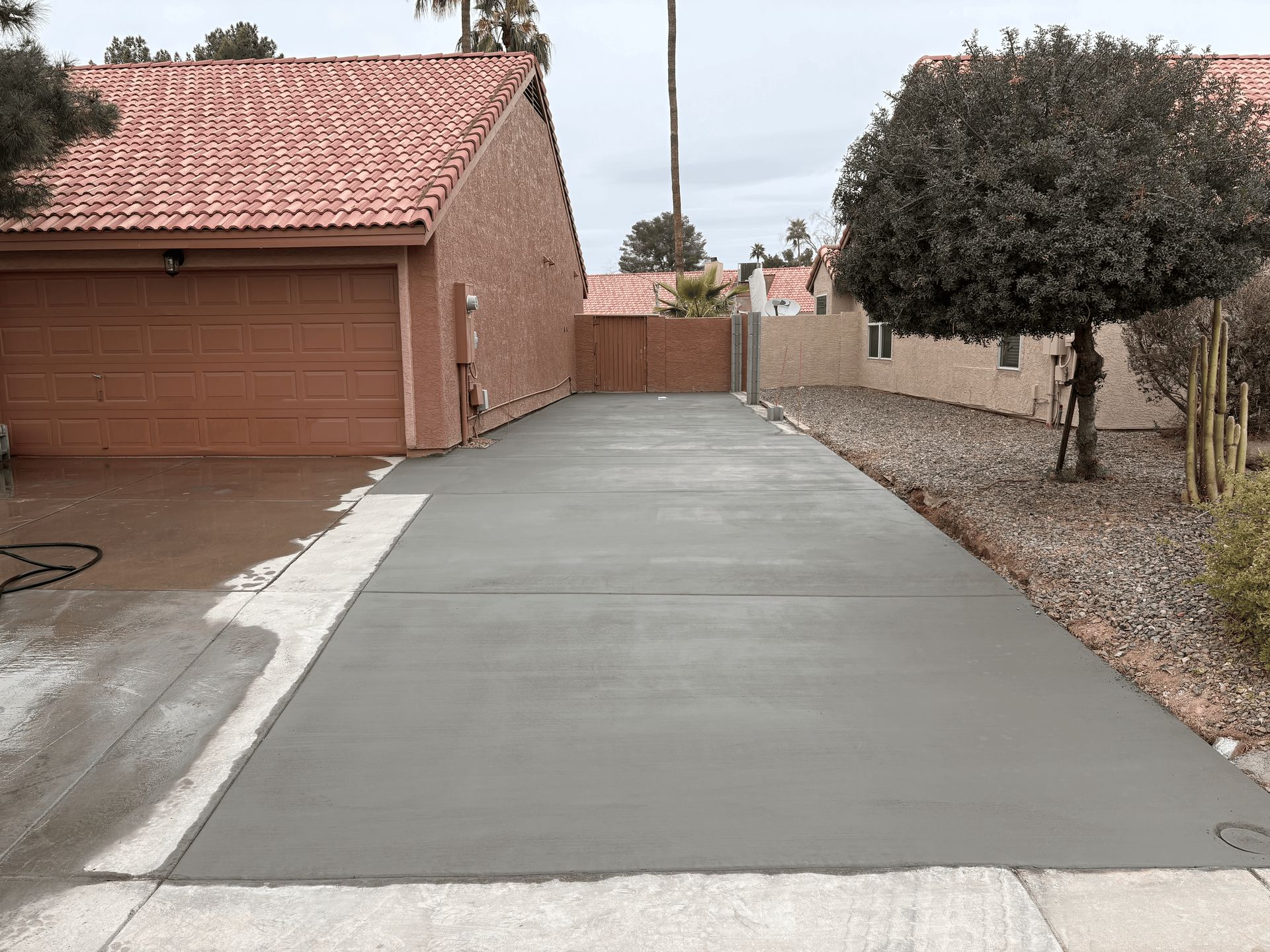
VEHICLE SLABS
Concrete Driveways
New and replacement driveways are poured thick enough for daily vehicle loads, with reinforcement, sloped drainage, and control joints placed to manage cracking. Decorative borders and aprons can be added for extra curb appeal.
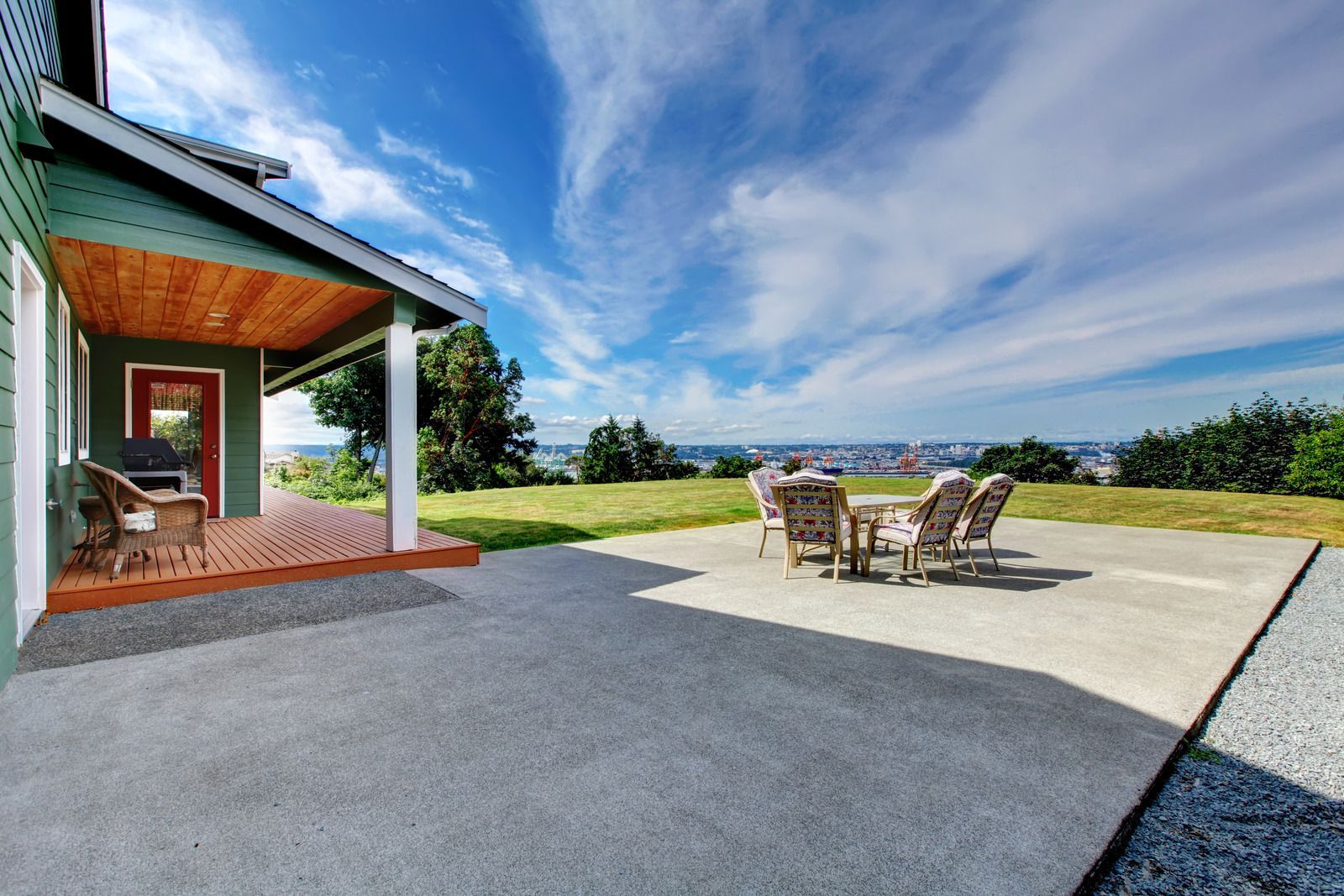
BACKYARD SLABS
Concrete Patios
Patios create room for outdoor dining, seating, and shade structures. We size and slope each slab for your space, add decorative finishes on request, and prepare it for future covers or furniture.
FOOT TRAFFIC
Sidewalks & Walkways
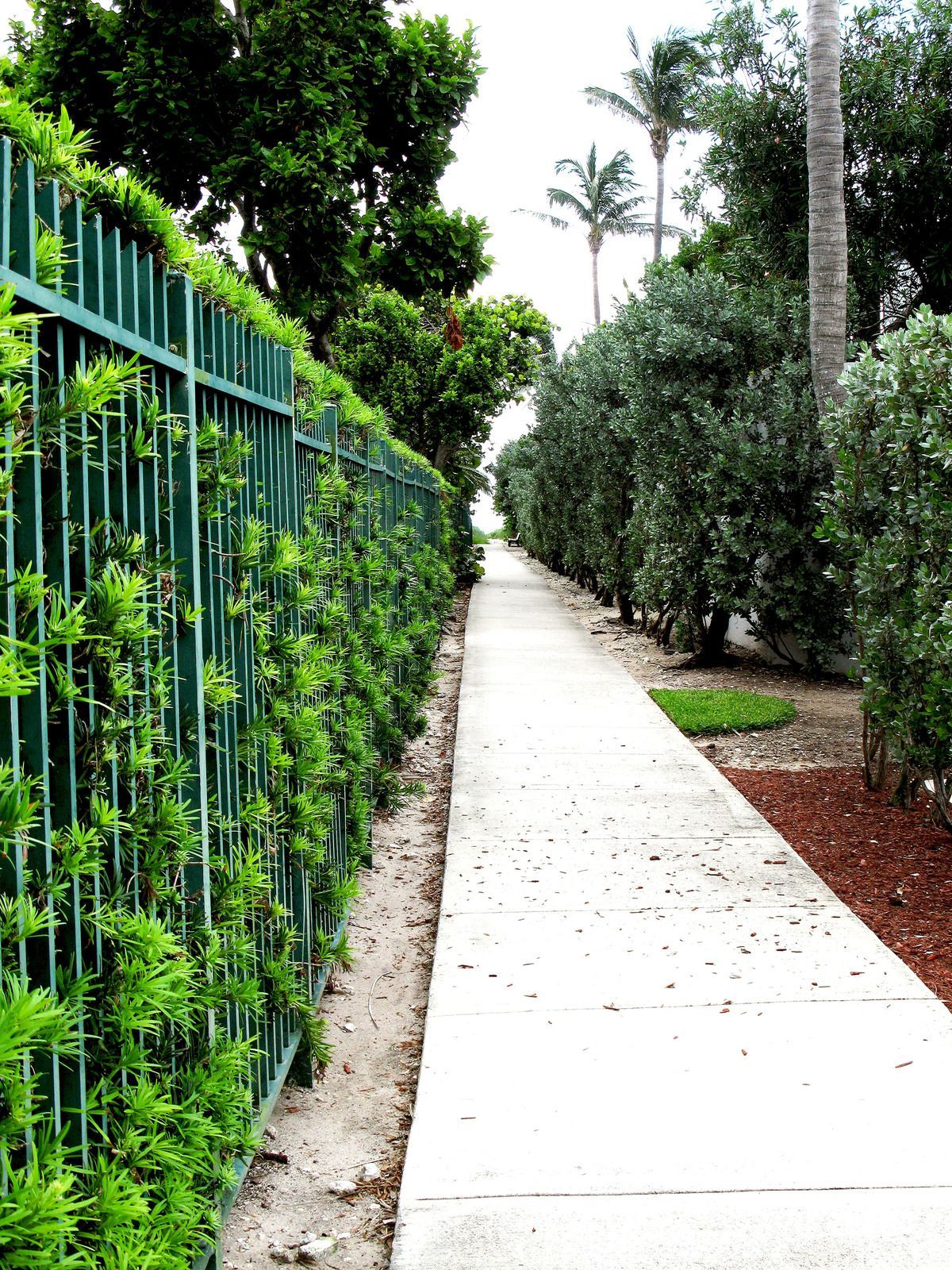
Walkways connect driveways, entries, gates, and gardens. We pour them at comfortable widths with gentle slopes, broom texture for traction, and tooled joints that keep the path looking neat over time.
STRUCTURAL BASES
Footings & Foundations
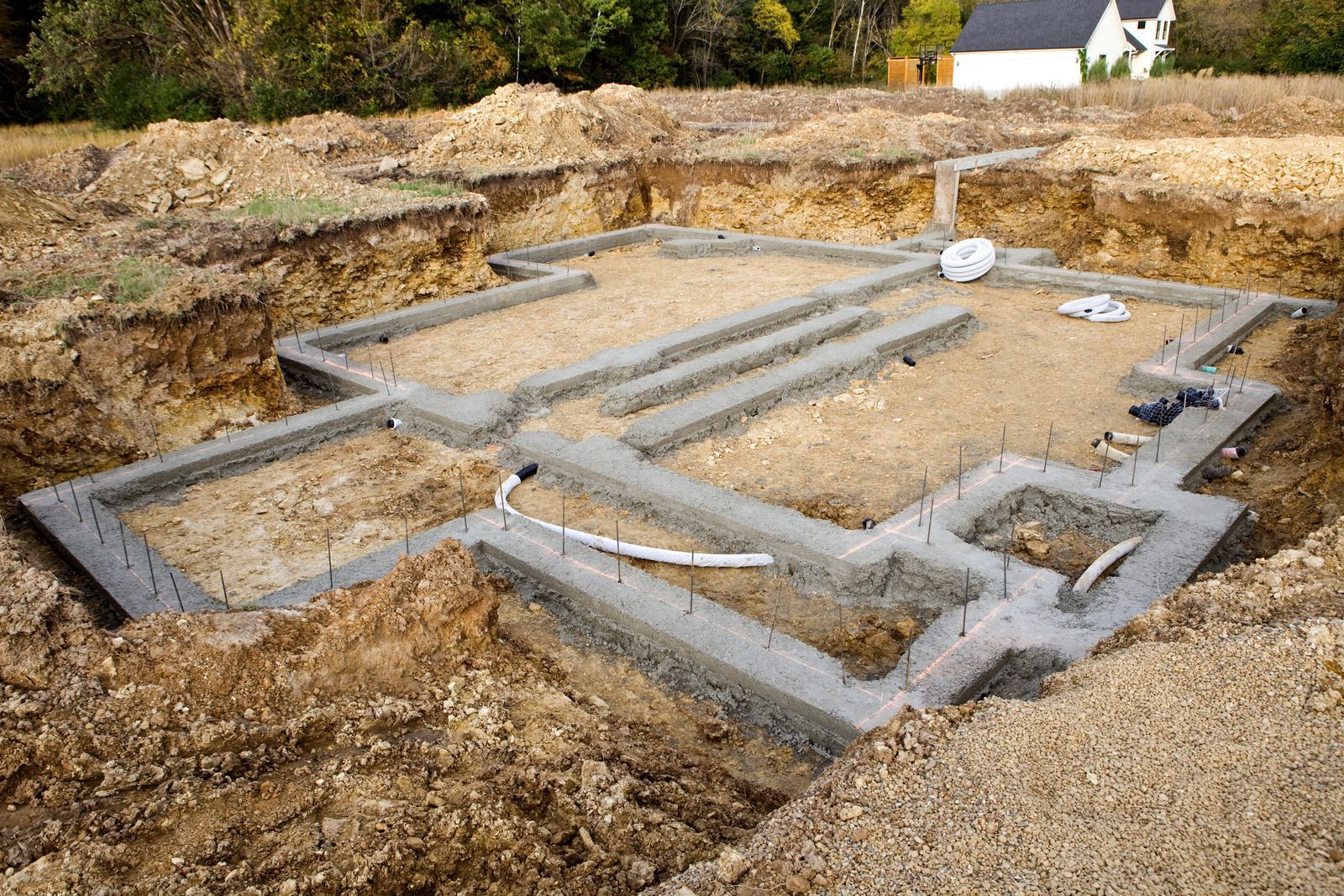
Walls, columns, and small structures depend on solid footings. We excavate to the needed depth, place rebar to specifications, and pour footings that give masonry and framing a stable base to build upon.
POOL SURROUNDS
Pool Decks
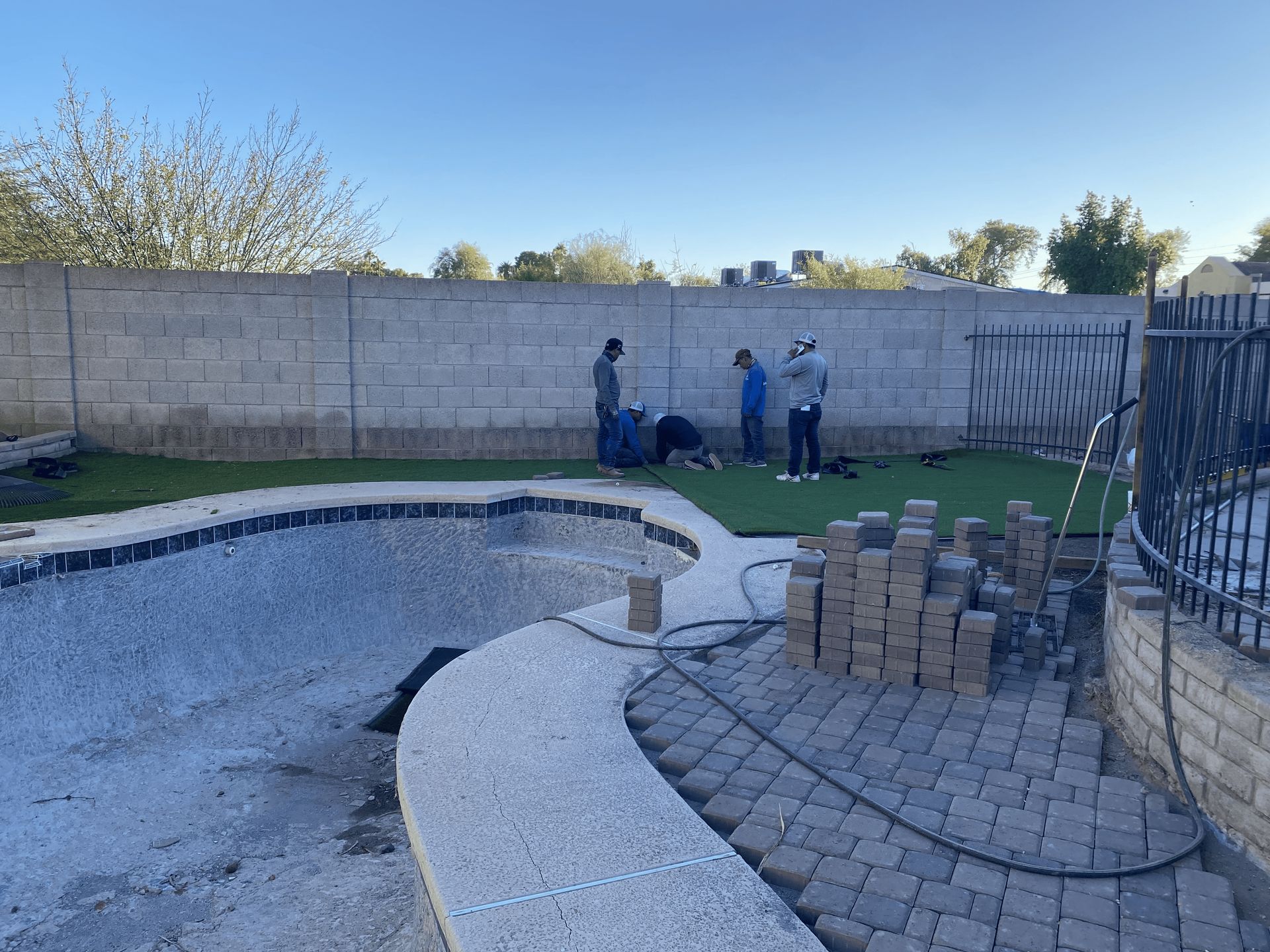
Pool decks need slip resistance, proper drainage away from the water, and finishes that stay comfortable underfoot. We pour and texture decks that pair safely with coping, tile, and surrounding landscaping.
EQUIPMENT PADS
Concrete Slabs & Pads
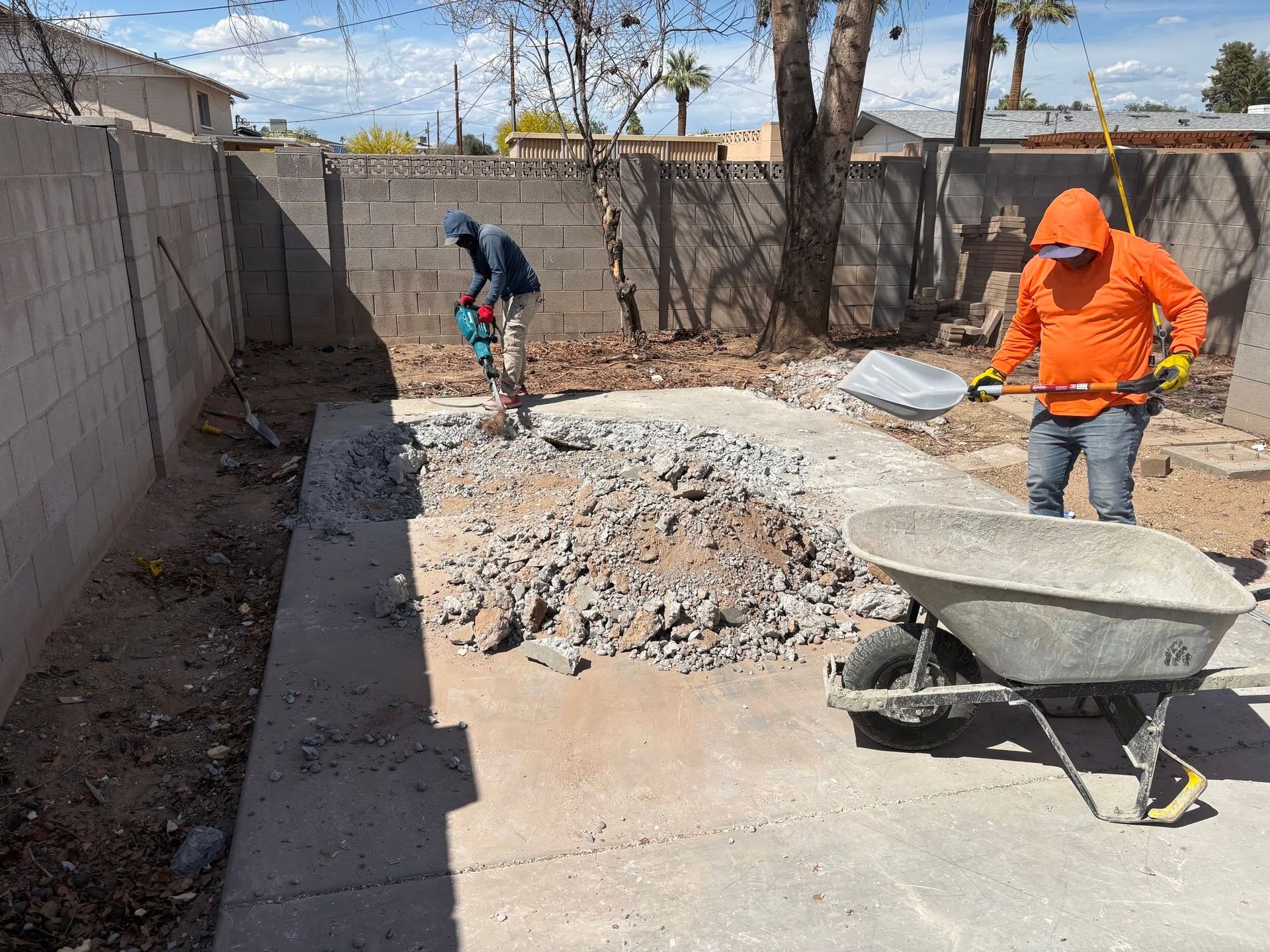
Level pads support sheds, air conditioning units, generators, trash enclosures, and commercial equipment. We compact the base, set forms precisely, and pour slabs sized for the weight they must carry.
THE WORD ON OUR WORK
WHAT OUR CLIENTS SAY.
Concrete clients commonly remark on how level and clean the finished surface looks once the forms come off, and how clearly we explained curing, early use, and sealing. Several appreciate that we kept vehicles, landscaping, and neighboring properties protected throughout the pour day.
FAQs
FREQUENTLY ASKED QUESTIONS.
Concrete projects often raise questions about thickness, timing, and care. These answers explain what property owners should know before planning a new driveway, patio, walkway, or slab installation.
How thick should a concrete driveway be?
Most residential driveways are poured 4 inches thick, while areas carrying heavier vehicles such as RVs or work trucks often need 5 to 6 inches. Soil conditions, reinforcement, and the expected load all influence the right thickness for each project.
How long before I can drive on new concrete?
Foot traffic is usually fine after 24 to 48 hours, and passenger vehicles can typically use a new driveway after about 7 days. Concrete keeps gaining strength for 28 days, so heavy vehicles should wait until that point whenever possible.
Why does new concrete crack?
Concrete shrinks as it dries, and that shrinkage creates internal stress. Control joints give cracks a planned place to form. Poor subgrade compaction, missing joints, rapid drying in hot weather, and excess water in the mix all increase random cracking.
Should I seal my concrete patio or driveway?
Sealing helps concrete resist oil stains, water, and ultraviolet fading. Durango Masonry & Tile generally suggests waiting at least 28 days before sealing new slabs in Tempe, AZ, then resealing every few years depending on traffic, sun exposure, and cleaning habits.
What is the difference between broom finish and exposed aggregate?
A broom finish drags a stiff brush across fresh concrete to create traction lines, giving a simple, practical, everyday look. Exposed aggregate removes the top paste to reveal stones in the mix, producing a decorative, textured surface with excellent grip.
Does concrete need rebar or wire mesh?
Reinforcement helps hold cracked sections together and adds load capacity. Driveways and structural footings commonly include rebar, while lighter patios may use mesh or fiber additives. The right choice depends on soil, thickness, and how the slab will be used.
Can concrete be poured during an Arizona summer?
Yes, with the right precautions. Early morning pours, dampened subgrade, cooler mix water, and prompt curing all help. Retarding admixtures can slow setting time, and wet curing or curing compounds protect the surface from drying too quickly in the heat.
How can I tell a well-built slab from a rushed one?
Look for a consistent slope, clean tooled edges, evenly spaced joints, and uniform texture. Durango Masonry & Tile builds each of those details into concrete work across Tempe, AZ, so slabs drain properly, crack predictably, and hold up to daily use.
HOW WE WORK
FROM EXCAVATION TO FINAL CURE, HERE IS HOW.
STEP 01
We Assess the Ground
We visit the site to measure, check existing grades, and look at soil conditions and drainage paths. Your plans for the space help us recommend thickness, reinforcement, finish, and the ideal joint layout.
STEP 02
We Remove and Excavate
Old concrete, turf, or debris is removed and hauled away first. We excavate to the planned depth, then add and compact base material so the new slab rests on firm, uniform support throughout.
STEP 03
We Form and Reinforce
Forms are set to precise lines and slopes, then rebar or mesh is placed on supports at the correct height. Expansion material goes in wherever the slab meets walls, footings, or existing surfaces.
STEP 04
We Place the Concrete
Concrete is placed, screeded, and floated while the crew works quickly and in sync. On hot days, we time the pour for cooler hours and keep the surface from drying before finishing begins.
STEP 05
We Finish and Joint
Edges are tooled, joints are cut or formed at planned intervals, and the chosen texture is applied. Decorative finishes, color, or exposed aggregate get completed during this window while the concrete is workable.
STEP 06
We Cure and Hand Off
Curing compound or a wet covering protects the fresh surface. Forms come off, the area is cleaned, and we explain when you can walk, drive, and seal so the concrete reaches full strength.