5 Signs Your Brick Wall Needs Professional Repair
Brick walls provide durability and structural integrity to countless homes throughout Arizona. However, even well-constructed masonry can develop problems over time due to weather exposure, settling, or normal wear. Recognizing the warning signs that your brick wall needs professional attention can save you from costly structural damage and ensure the safety of your property.
Key Takeaways
- Crack patterns wider than 1/4 inch or those that continue growing require immediate professional evaluation
- White chalky deposits on brick surfaces indicate moisture infiltration that can compromise wall integrity
- Bulging or bowing walls represent serious structural concerns requiring immediate intervention
- Crumbling mortar joints weaken the wall system and allow water penetration
- Foundation settlement issues can create stress patterns in brick walls that worsen over time
- Professional assessment helps distinguish between cosmetic issues and structural problems
1. Visible Cracks in Brick and Mortar
Brick cracks are common and don't always indicate serious structural damage, but they can make homes prone to water damage and mold. Most cracks can be fixed, but they tend to spread and become larger quickly.
Different crack patterns indicate specific problems:
- Horizontal cracks - Often caused by foundation movement, moisture penetration that weakens structural integrity, or sudden forces like seismic activity. Structural damage from constant wear and tear can also cause horizontal cracking
- Vertical cracks - Most common in warmer climates, typically caused by thermal expansion leading to material movement, or foundation settlement, creating stress on bricks
- Stair-step cracks - Zig-zag cracks that follow mortar lines around bricks, often indicating foundation movement. These occur due to differential settling or thermal expansion
Understanding Crack Severity
The shape, width, and location of cracks reveal the source of stress. Recognizing what caused the problem is the only way to choose the correct repair method. Most brick cracks begin with pressure from below when soil shifts, compresses, or sinks.
Small movements in the ground are common and become more noticeable over time, especially around corners, windows, and door frames. Hairline cracks are narrow and usually shallow, most caused by minor drying shrinkage, temperature changes, or early foundation settling.
When Professional Help Is Needed
Cracks smaller than one-sixteenth of an inch typically aren't serious, but should be repaired before they spread. Medium cracks that spread across multiple bricks need immediate attention.
Signs requiring immediate professional evaluation include:
- Cracks wider than 1/4 inch
- Any crack that continues to grow
- Multiple cracks in the same area
- Horizontal crack patterns
Professional contractors thoroughly inspect affected areas and check for signs of structural damage, such as foundation cracks. If damage is extensive, professional help is recommended. The first step in repairing brick wall cracks is thoroughly inspecting the affected area.
2. Efflorescence and Water Damage
Efflorescence appears as crystalline salt deposits on porous surfaces like brick. It's a white, powdery substance that can be found on unsealed surfaces. While efflorescence is primarily a cosmetic issue, it indicates potential moisture intrusion that could lead to major structural and indoor air quality issues.
Understanding the Formation Process
Efflorescence forms when soluble salts from within the material are dissolved by water and carried to the surface. As water evaporates, it leaves behind chalky salt deposits. Simply stated, efflorescence occurs when water containing dissolved salts is brought to the surface of masonry, the water evaporates, and the salts are left on the surface.
Salt efflorescence requires three elements: salt, water, and porous materials. Water dissolves salts and moves them to the surface, and as water evaporates, the salts are left behind.
Sources of Salts and Water
Common sources include Portland cement in mortar and grout, which is high in alkalis according to the Brick Industry Association, lime that produces calcium chloride when reacting with acid, and concrete masonry units that can contain two to seven times as much soluble material as fired clay material.
Water sources include rain, snow, sprinkler systems, cracks, gaps, and groundwater. During construction, water used in cement and mortar mixtures can start the process.
Associated Problems
Efflorescence indicates potential moisture intrusion that could lead to major structural and indoor air quality issues. Water infiltration concerns include:
- Freeze-thaw cycles that can cause expansion and cracking when water expands during freezing
- Subflorescence, where salt deposits form in subsurface cracks, causing spalling
- Efflorescence as an indication of water infiltration and underlying damage behind masonry
- Strong osmotic pressures that can be greater than the structural strength of concrete and cause materials to crack, flake, and break apart
| Warning Sign | Immediate Concern | Potential Risk |
|---|---|---|
| White deposits | Moisture infiltration | Structural damage |
| Recurring efflorescence | Ongoing water intrusion | Permanent structural damage |
| Salt buildup | Surface deterioration | Spalling and cracking |
Recurring efflorescence may indicate an ongoing problem of water intrusion that needs to be addressed before it causes permanent damage to the structure. Efflorescence is often a seasonal problem, and humidity will impact whether soluble salts appear.
3. Bulging or Bowing Walls
Brick veneer walls that are extensively damaged, bulged, loose, and collapsing will probably need to be removed and rebuilt. Bulging indicates that the wall system is experiencing forces beyond its designed capacity.
Common Causes and Safety Concerns
Foundation movement creates uneven support that forces walls out of alignment. Thermal expansion without proper expansion joints can create excessive pressure. Water damage behind brick veneer can cause framing to shift, and inadequate wall ties can contribute to instability.
When brick veneer cracks due to weather conditions, the brick and mortar joints expand and shrink. If not treated, brick veneer cracks are likely to become bigger over time. If problems are not fixed, the issue with the veneer could spread, leading to serious structural damage.
Bulging walls pose immediate safety risks and can progress rapidly. Loose brick veneer walls require securing to the structure using wall ties, while extensively damaged walls need removal and rebuilding.
Professional Assessment and Repair
A brick wall should be straight and even. If you notice that your wall is bulging or sagging in places, this indicates a problem with the wall's structural integrity. It could be due to foundation issues or damage to the wall itself.
Wall deformation should be professionally assessed for structural issues. Retrofit brick veneer connectors can be installed through mortar joints and connected to the structure for repair. These connectors mount through mortar joints and connect to the building structure behind.
Traditional brick veneer wall ties are corrugated galvanized steel straps that nail to the building's structural wall and bend outwards at a 90-degree angle to place the tie's strap into successive mortar joints as the veneer wall is built.
For walls that are not extensively damaged, repair options include adding fasteners for loose brick veneer walls, installing wall ties that connect through mortar joints, clearing blocked drainage openings, and repairing damaged wall tie systems.
4. Deteriorating Mortar Joints
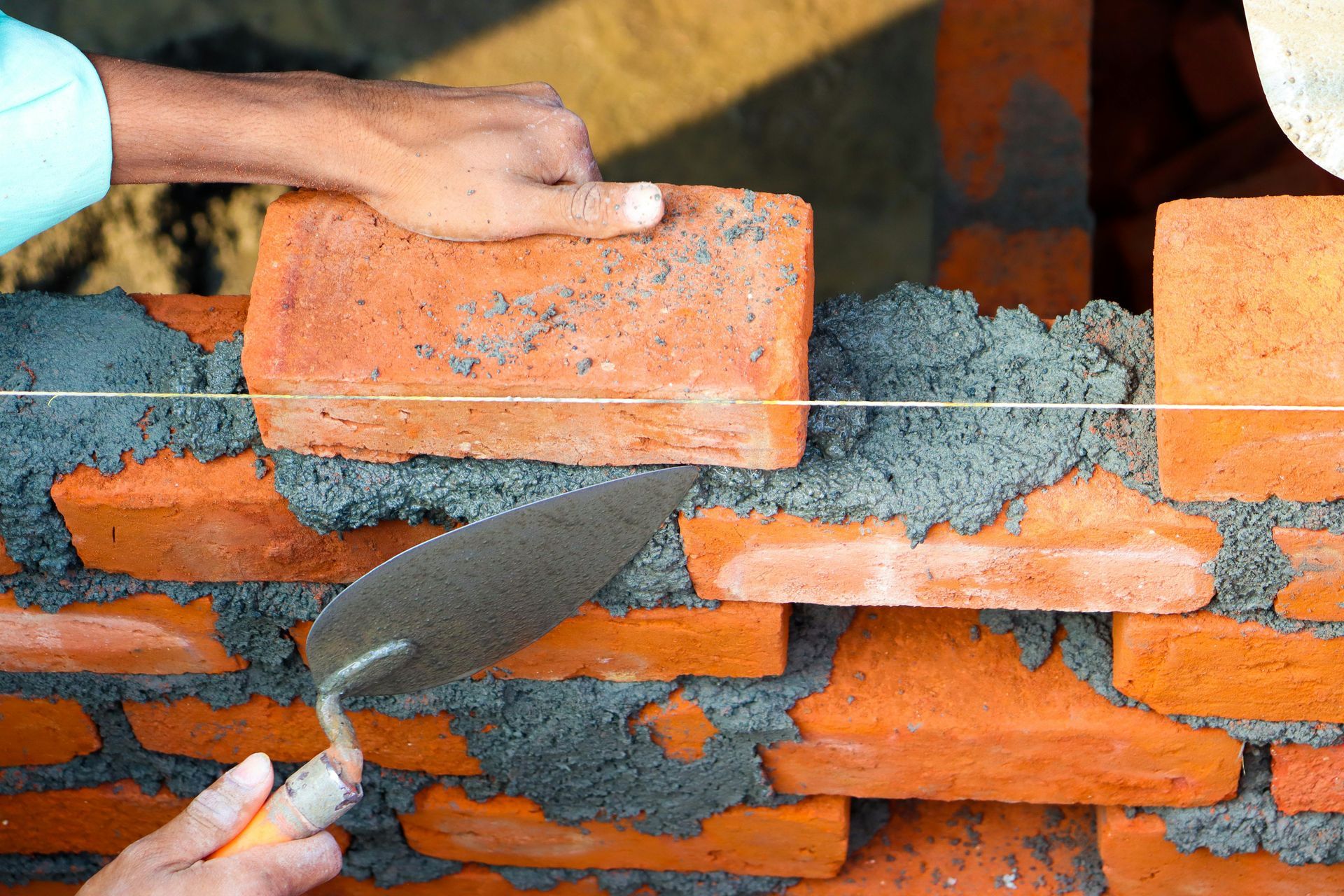
Repointing involves the removal of damaged or deteriorated mortar joints between bricks and replacing them with new ones. This repair is necessary when mortar joints crack or crumble due to weathering, age, or thermal movement. Repointing not only improves the appearance of the wall but also provides structural support.
Signs of Deterioration
Mortar joint problems include:
- Cracking and deterioration from weathering, temperature changes, and wear over time
- Missing mortar sections that allow water penetration
- Cracked mortar that needs removal to a depth of 2 centimeters on horizontal joints
- Soft or crumbling mortar, indicating that the binding agents have broken down
The leading causes of brick deterioration and cracking include moisture accumulation, temperature changes as bricks expand and contract with temperature changes creating stress on mortar joints, and gradual wear and tear over time from exposure to weather conditions.
The Repointing Process
The repair process involves inspection of affected areas, cleaning with wire brushes, mortar removal to ensure new material adheres effectively, and application with proper consistency mortar mixed using sand, cement, and bonding agent.
Tuckpointing involves two different colors of mortar to give the appearance of fine joints between bricks and restore the original look of the wall.
Key considerations for proper repairs:
- Repair materials must be compatible with original construction to prevent future cracking
- Proper mortar analysis to determine correct replacement mix
- Repointing improves appearance and provides structural support
- Portland cement should not be used on lime-based mortar walls
A lime-based mortar wall should never be patched with hard Portland cement, as the mismatch will cause more cracking in the future.
5. Foundation Settlement and Structural Movement
Settlement occurs when the foundation beneath walls shifts or sinks, causing stress on the bricks. Foundation movement creates pressure that causes cracks to appear as walls try to adjust. No amount of surface patching will work unless the issue beneath the surface is stabilized.
Identifying Settlement Damage
Step cracks following mortar joints in diagonal patterns frequently indicate differential foundation settlement. These cracks appear in the masonry as the wall tries to adjust to changing foundation conditions.
Other signs of foundation-related damage include:
- Doors and windows that stick or won't close properly
- Gaps around door and window frames
- Uneven or sloping floors inside the building
- Separation gaps between brick walls and adjacent building elements
- Cracks between walls and ceiling indicating structural issues
Foundation Problems and Causes
One main reason for vertical cracks is settlement when the foundation shifts or sinks. This corner cracking can occur if the wall is exposed to wind or harsh weather conditions that weaken the structure.
Certain types of soil contribute to the weakening of brick walls and foundations. If you notice cracks in brick walls, look around for possible signs of foundation problems, including doors that won't close properly, windows that stick, or cracks between walls and ceiling.
Arizona Soil Conditions
Arizona's climate and soil conditions present specific challenges. Clay soil naturally has high salt content, making efflorescence removal often only temporary. Expansive soil conditions can cause differential movement that appears as brick wall damage months after ground movement. Caliche layers common throughout the Phoenix area can create uneven support conditions.
Professional Requirements
If the foundation damage is extensive, professional help is recommended to check for signs of structural damage, including foundation cracks. Once you've established that damage is limited to bricks and isn't a foundation problem, repair can proceed.
Foundation-related repairs require:
- Evaluation of movement extent and progression
- Assessment to determine if damage is limited to bricks or involves foundation problems
- Appropriate repair methods for both foundation and masonry elements
- Coordination between foundation and masonry specialists
Masonry repair specialists in Tempe, Chandler, and Mesa work with foundation experts to develop repair solutions that address underlying causes while restoring structural integrity. Professional contractors can assess the issue and recommend appropriate repair solutions to keep your home safe and secure.
Frequently Asked Questions
How quickly should I address cracks in my brick wall?
Cracks smaller than one-sixteenth of an inch typically aren't serious but should be repaired before they spread. Medium cracks spreading across multiple bricks need immediate attention.
Can I repair mortar joints myself?
Working with masonry can be dangerous due to stone dust that can lodge in the lungs and heavy materials that can cause injury. Working with professionals ensures safety. Improper materials can cause more damage than othe riginal deterioration.
What's the difference between cosmetic and structural problems?
Cosmetic cracks are surface-level and may allow moisture into walls, while structural cracks run deep and are serious problems that threaten structural integrity. Small cracks are easily repaired but can turn into structural issues when neglected.
How do I choose the right masonry contractor?
Look for licensed contractors with specific masonry experience, positive local references, and proper insurance coverage. Professional companies should provide detailed assessments and written estimates before beginning work.
Will brick wall repairs affect my home's value?
Professional masonry repairs typically maintain property values by preserving structural integrity and appearance. The cost to repair a brick wall is relatively small compared to larger structural issues.
Final Thoughts
By recognizing these five warning signs, you can maintain brick wall safety and protect your property investment. From crack patterns indicating structural movement to white deposits signaling moisture problems, early intervention by qualified professionals prevents minor issues from becoming major concerns. Whether you need block wall repair in Tempe, masonry services in Mesa, or contractor consultation in Chandler, addressing these warning signs promptly maintains both structural integrity and property value.
Ready to get your brick wall repaired? Contact our experienced masonry team today for a free estimate and professional assessment of your Tempe property.
Reference:
https://www.gobrick.com/
You might also like